Hire more people
Stress moves to employees and supervisors, and the underlying causes remain hidden.
Consequence: People burnout and/or leave, go off sick, and you're back where you started.
Human Systems Readiness Report
Map the pressure. Find the cause. Get relief.
Identify where AI can add real capacity — without adding payroll.
Not ready yet? Get the free Pressure Map — a 20-minute self-diagnostic to use today.
"Every change program explains what has to happen.
Almost none of them build the human readiness to carry it."
That is what the Readiness Report fixes first.
Get the Report — $997Stress moves to employees and supervisors, and the underlying causes remain hidden.
Consequence: People burnout and/or leave, go off sick, and you're back where you started.
Identify stress fractures, use that information to reveal and create your tailored support system.
Result: Stress fractures stop, people feel supported, show up for work, and know what to do without you.
Training, by itself, doesn't change your system.
Consequence: Training gets done. Behaviours don't change and people get more frustrated.
Employees and leaders learn how to operationalize PHS.
Result: People feel safe, energized and lead the changes you need.
New tech digitizes dysfunction. The technology adds complexity without solving the problem.
Consequence: People work around it, duplicate their work, or stop using it entirely within six months.
AI and automation connect scattered systems, reduce workloads, and create workflows people actually use.
Result: The tools and processes work because the human system it runs on was ready for it.
When problems show up, the reflex is to identify who isn't performing & who needs to be managed closely.
Consequence: Trust drops, resistance goes underground, and the real constraints stay invisible and unfixed.
Leaders learn how to listen, interpret and translate systemic distress to turn it into Human Systems Solutions.
Result: System pressures are addressed early before they derail you, your team or your goals.
The most capable leaders hold everything in their heads.
Consequence: Work follows them home. Evenings and weekends are used for what didn't get done.
Make the right work visible, owned and supported by the system so you do what only you can.
Result: You lead. The system carries. Less ends up in one person's head at 11pm.
Most organizations think about AI as a productivity tool. The leaders who get the most from it think about it differently: AI is capacity — the kind that does the work everyone hopes more bodies would do, without requiring a hire, an onboarding, or a salary.
The Readiness Report finds exactly where that capacity can land in your operation. Not a tool tour. A specific map of where AI can take real load off the people who have been absorbing it.
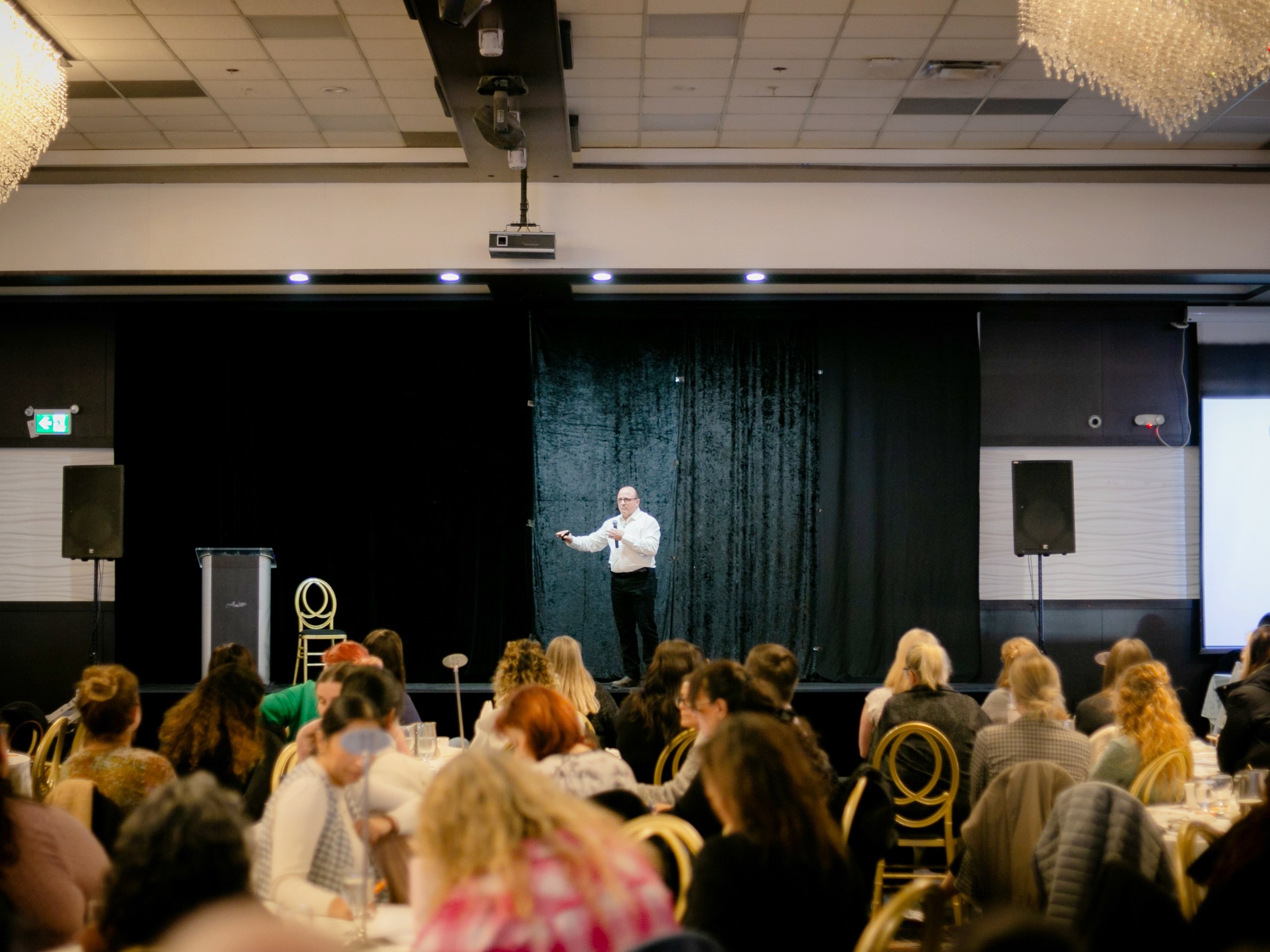
No hire. No onboarding. No salary. The load moves to AI — and the people doing the real work get their hours back.
Less time stitching together the operation. More time actually leading it.
Walk into the conversation with the answer already mapped. Stop running operations from your inbox at 11pm.
The work the system requires — done before it becomes a fire.





I've lived, worked and led inside high-stakes operations where never-ending problems with safety, compliance, people, schedules, and costs happen 24/7. I've also spent years sitting with leaders who were still carrying their whole operation in their head at 11pm.
That's why this work is practical. Not another program to roll out. Not a theory about what might work if conditions were better. A direct look at what is actually breaking down — and what needs to happen next so the work gets done without requiring the same people to hold it all by themselves.





















"Trace has a spectacular ability to coach staff and help them develop tools to survive in the stressful realm of healthcare. He invites ownership and insight into individual challenges that benefits large teams and groups."
"At Fraser Health in the Management Development Program, Trace facilitated a meaningful session on Psychological Health and Safety for about 30 participants. From the beginning he had people’s attention and cooperation. He kept things moving without being rushed — and his wisdom, experience, and deep listening shone through."
"This has literally changed the way I lead and run my business. I stopped being busy and started listening on a visceral level to what is needed from the business, my staff, and customers. My actual personal output has increased exponentially. I am better able to lead."
The report does not fix everything. It tells you what to fix first — so you stop spending money, trust, and time on the wrong solution.
Monthly spots are limited — each report is prepared personally by Trace.
The pressure is landing on you and you need to know what to fix first.
The same problem is showing up across a leadership team or operating unit.
Multi-site, unionized, cross-functional, or higher-risk environments.
If the report doesn’t give you a clear picture of what is driving the pressure and a practical plan for what to do about it, we add a second 60-minute working session specifically to close that gap. No additional charge. The risk is ours, not yours.
Most assessments diagnose the Platform (technology) or Process and stop there. The human side — trust, capacity, manager readiness, psychological safety — stays untouched. Then the same people are asked to carry the same change into the same overloaded system. This report starts with People and Pressure first, because that is where most initiatives actually stall. The 4P model (People, Pressure, Process, Platform) looks at all four together — and the AI Capacity Map identifies specifically where AI can take load off without adding a new layer of complexity to the system that already failed you.
The only real calendar commitment is one 90-minute working session with Trace. Everything before that — the intake and document review — happens asynchronously, using materials you already have. No new documents to create. No preparation meetings. The report is specifically designed for leaders who have no capacity, because that is the condition it is built for. The harder question is whether you can afford another month without clarity on what is driving the pressure.
One 90-minute block. That is the session itself. The intake is a short form you complete when you have a moment. The document review uses things like audit summaries, incident reports, and org charts that already exist. Most leaders complete the intake in under 20 minutes. If you can find 90 minutes — and the question is whether the same problems are worth another 90 minutes of your time — the rest adapts to your schedule.
You do not have to. The Readiness Report works at the leader level first. It does not require you to introduce anything to your team, run another workshop, or ask people who are already at capacity for more. What it does is diagnose WHY your people are suspicious and burned out — and what the system needs to change before they are asked to carry anything else. Resistance is almost always a signal that the system is not ready, not that the people are difficult. The report finds that signal so you can address the cause instead of pushing harder into the same wall.
The Leader Report at $997 delivers: a 90-minute working session, a personal 4P Human System map, your top 3 constraints named specifically, an AI capacity map identifying where AI can act as additional labour, a 30-day action plan, five practical tools, and a clarity guarantee. For context: one prevented lost-time injury typically saves $50,000 to $150,000. One retained manager saves an estimated $80,000 to $300,000 in replacement costs. One avoided investigation or audit failure saves time, legal exposure, and leadership credibility that cannot be priced. The report does not fix everything. It tells you what to fix first — so you stop spending money, trust, and time on the wrong solution.
I led inside high-pressure operations for over 25 years — industrial, construction, energy, healthcare — where safety, people, schedule, cost, and compliance all had to work at the same time. I have carried operations home in my head. I have sat across from leaders who were doing the same. What I know from that experience is that most of the pressure people are carrying is not personal failure. It is a system that was never designed to hold what it is being asked to hold. I do this work because the gap between what organizations ask people to carry and what they give them to carry it with is real, measurable, and fixable — and because I have seen what happens when it gets fixed.
The report is built from your context, not a generic framework applied from the outside. The intake maps your specific pressure points. The document review uses your actual audit findings, incident trends, and workflow documentation. The 90-minute session is a live working conversation, not a slide deck. The output is a 30-day plan written for your situation — not a general report with recommendations that assume different conditions than yours. If you already know what is broken, the report will confirm it and tell you what to fix first. If you are not sure, it will find it. Either way, you leave with specifics — not principles.
Two arguments tend to land. First, cost of inaction: one unresolved investigation, one preventable lost-time injury, one supervisor leaving — any of those individually costs more than the report. Leadership development in healthcare returns an average of 3.5x on investment, with savings of $300,000 per retained nurse. Second, compliance: BC health authorities are now legally required to address psychological health and safety through the CSA Z1003 Standard (in the BCNU collective agreement), SWITCH BC's province-wide framework, and active WorkSafeBC inspections. The question for leadership is not whether to address it — it is whether to do it reactively after a WorkSafeBC inspection or proactively with a clear plan.
The report does not require organized systems. The intake is based on your experience and judgment — not your filing structure. The document review asks for 2 to 5 documents you already have access to, whatever is most available. The 4P model is specifically designed to work inside messy, fragmented, multi-site environments — because fragmented Platform and Process are diagnostic signals, not barriers. The complexity you are describing is exactly what the report is built to map. We have worked inside health authorities, industrial operations, and multi-site public sector organizations where systems were scattered, data was inconsistent, and no one had been able to pull the picture together. That is not a reason this will not work. It is a reason it is needed.
Yes. The report works within whatever governance framework your organization requires. We review only what you choose to share. Nothing leaves the engagement without your approval. We have worked inside BC health authorities (Fraser Health, Island Health), federally regulated energy companies, and high-risk industrial operations — all of which operate under strict confidentiality, privacy legislation, and governance protocols. If your organization has specific requirements around data handling, document sharing, or confidentiality agreements, we establish those before the intake begins. The report adapts to your governance — not the other way around.
One unresolved investigation. One failed audit item. One supervisor working weekends. One preventable lost-time injury. One good manager who decides it's time to leave.
Any of those costs more than the report. Most organizations are carrying several at once.
Get the Readiness ReportHuman Systems Readiness Report
Bring the change initiative, the pressure, or the adoption problem you are trying to solve. We will map the human system, find what is driving it, identify where AI can give capacity back, and leave you with a 30-day plan for what moves first.